Imagine this: you land in Jakarta after a long flight, your bag still smells like travel, and all you want is one thing. A solid workout before dinner.
Then you walk into the hotel “gym” and it turns out to be smaller and more limited than you expected. Maybe it’s mostly cardio machines, or the free weights you rely on are missing. You might notice the space feels tight, and the overall setup just doesn’t match the kind of training you planned.
That’s the real problem with searching for a Jakarta hotel with a gym. The phrase can cover everything from a basic fitness room to something closer to a full health club experience, where exercise and recovery feel like they belong together. In other words, you’re not just comparing hotels. You’re comparing how well the gym fits your routine.
The good news is you don’t have to guess. This article gives you a practical checklist so you can compare hotels in a grounded way, not just by marketing photos. You’ll learn what to look for in equipment (cardio and strength), how access and hours work in real life, and whether the workout flow makes sense once you’re inside the room. We’ll also cover common red flags like limited hours, equipment that looks worn, unclear inclusions, and even overcrowding at peak times.
Next, we’ll get more specific about what a hotel gym typically includes in Jakarta, so you know exactly what you’re evaluating before you book.
If you want a faster way to match your trip needs to the right facilities, review gym and wellness options you can expect during your stay.
What a “Jakarta hotel with a gym” really means
Gym can mean a small fitness room
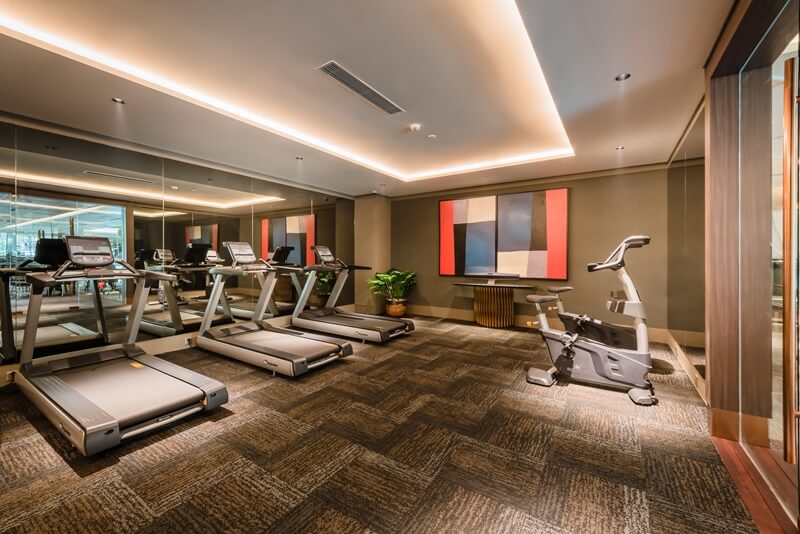
“Gym” doesn’t always mean what you think it does. In many Jakarta hotels, the “gym” is basically a compact fitness space with a handful of machines. You might find cardio options and a limited set of strength equipment, but there may not be enough room for a full routine, especially if your training needs free weights or more open floor space.
That kind of setup can still be useful for basic workouts, like treadmill sessions or light lifting. Just don’t expect it to behave like a dedicated training facility where every machine and weight is always available in the way you’re used to.
Health club usually feels more complete
At the other end of the spectrum is the experience that’s closer to a health club. Instead of a single corner of equipment, the gym is more often integrated with broader wellness amenities, such as a pool and recovery-focused spaces like a spa or sauna/steam setup. The goal feels less like “find a machine” and more like “move, recover, repeat.”
When a hotel invests in this kind of setup, the workout flow tends to be smoother. You can often go from exercise to recovery without treating it like two separate trips. Even the environment usually supports that mindset, with better spacing and a more intentionally designed fitness area.
Included access versus extra services
Another big difference is what’s truly included with your stay. Gym access itself is often part of the guest experience, but some wellness add-ons and coaching-type services may come with an extra fee. That can include items like personal training or structured fitness classes, depending on the hotel and what they offer.
So even if a listing says “gym included,” it’s worth checking what the gym access covers and what might be priced separately. This prevents the annoying surprise of assuming every fitness option is included when it isn’t.
Access and amenities shape expectations
Finally, “gym quality” in practice is tied to access and the surrounding amenities, not only the equipment list. Some hotels support workouts on a flexible schedule, while others restrict gym hours or require specific access steps that can make late sessions harder. Equipment can also become crowded at peak times, which affects how quickly you can move through your routine.
When you understand these differences up front, you stop comparing hotels on the word “gym” alone. You start comparing the actual experience you’ll get during your stay, which is exactly why this matters for the trip.
Why the hotel gym matters for your trip
Routine continuity when your schedule breaks
Nothing derails your fitness like a trip. One late meeting turns into a missed workout, and then you just keep falling behind. A hotel gym helps you stick to your routine even when Jakarta is busy and your day feels unpredictable.
It also makes it easier to do something small consistently. A quick cardio session or a short strength circuit can keep you moving, instead of waiting until you’re home to start over.
Recovery support that actually fits travel
Training is only half the story. Travel comes with tired muscles, stiff joints, and that “I need to feel better” feeling by evening. When a hotel gym comes with wellness add-ons like a pool and recovery-friendly spaces such as a spa or sauna/steam, your workout-to-recovery loop becomes smoother.
That matters because you do not just want exercise. You want to feel good after it, so the next day stays easier.
Energy and stress control, not just exercise
Jakarta travel can be mentally intense, especially with traffic and tight itineraries. Exercise helps you reset. Using the hotel gym means you can rely on a familiar routine to boost energy and lower stress, without hunting for options outside the hotel.
When the gym is convenient, you are more likely to show up, even on days when motivation is low.
Business and fitness travelers make it a decision factor
A gym is not only for fitness enthusiasts. Business travelers also care because the gym supports stamina for long days. If the facility is solid and accessible, it can strongly influence whether a hotel feels like the right fit for your trip.
This is why gym quality and access details are worth paying attention to before booking, not just after you arrive.
Recovery amenities can change what “good” feels like
Sometimes the equipment is fine, but the overall experience feels incomplete. If the hotel offers recovery amenities alongside the workout area, “good enough” can turn into genuinely comfortable training days.
Once you connect the gym to how you’ll feel afterward, the gym stops being a minor perk and starts being part of your trip experience.
Next, let’s look at what happens once you arrive, and how hotel gyms typically fit into the day in real life.
How hotel gyms work day to day
1. Get in right after check-in
“The keycard worked, and the gym door opened instantly.” That’s how it should feel when you arrive and want to work out before dinner. Most of the time, the hotel tells you where the fitness area is and how you access it.
Check what you actually need to enter, like a room key-card, and whether towels or water are available. If the gym is far from your room or requires extra steps, plan for that in your schedule.
2. Verify what “24-hour” really means
Don’t treat “24-hour” as a guarantee that you can train any moment without friction. Some hotels advertise the idea, but entry might be limited, staff might not be present, or certain areas could be harder to access late at night.
Before you commit to a late workout, confirm the practical reality: when the gym doors are open, how access works at off-hours, and whether you might need staff help to get in.
3. Use the machines and watch for crowding
Once you start training, the real test is how the gym handles daily demand. Many Jakarta hotel gyms are shared spaces, so cardio equipment can get busy around common routines, like early mornings or after work.
Use your time wisely: rotate between machines, keep your rest periods realistic, and pay attention to whether the space supports safe movement. If it feels cramped, your workout flow may be slower than you planned.
4. Add recovery if the hotel has it
If the hotel includes recovery amenities, your workout day becomes more than just lifting or cardio. A pool, spa services, or a sauna/steam setup can help you cool down and feel better afterward.
This is especially useful when you travel hard, because recovery is where you earn the next day’s energy. When recovery is convenient, it’s easier to keep training consistent.
5. Notice layout and spacing for a safer session
Equipment lists look similar on paper, but layout matters in real life. Stand where you would place your feet, think about how you’ll move between machines, and check if there’s enough clear space for stretching or strength work.
When the workout flow feels awkward, you spend more time adjusting and less time training. A gym that supports smooth movement usually feels better and keeps sessions efficient.
Now that you’ve seen what happens once you arrive, here’s what to check before you book.
What to check before you book
Equipment match for your workout style
A hotel gym can be cardio-heavy with limited strength options, or it can feel more complete. Before booking, scan what equipment categories exist, because your routine depends on it.
If you care about lifting, look for strength options like free weights and more than just basic machines. If those parts are missing, your sessions may turn into quick maintenance instead of real training.
Cardio availability when you need it
Cardio is usually the easiest part to find, but availability still varies. Check whether the gym offers enough cardio choices, such as treadmills or other machines, for the time window you’ll realistically work out.
Also consider crowding around common peak hours. If the cardio area becomes the bottleneck, your workout flow gets slower and more frustrating.
Strength training options that feel usable
Strength training is where hotel gyms often differ the most. Look for equipment that supports your basic movements, not just a single “guest-friendly” setup.
Even when lifting is possible, limited space can affect how safely you move between stations. That’s why it’s worth reading about how the gym actually operates, not only what it looks like.
Access hours and true 24-hour behavior
“24-hour” sounds perfect, but it’s not always frictionless in real life. Some gyms are effectively accessible only during certain staff or building conditions, even if the listing says otherwise.
Confirm the practical access pattern for late or early workouts. If you plan to train around your schedule, this detail can make or break your consistency.
Maintenance and cleanliness cues you can spot
When a gym is well maintained, machines feel smooth and the space feels ready to use. If you notice complaints about cleanliness or broken equipment, treat that as a signal that the gym might not support your routine reliably.
Pay attention to whether basics are available, like towels, water, and wipes or similar cleaning items. Those small items directly affect whether you’ll actually want to train.
Workout flow comfort from layout to AC
Equipment alone is not the full story. A tight layout can slow you down, and poor ventilation or lighting can make longer sessions feel harder than they should.
Check how the gym space is arranged so you can move between cardio and strength areas with minimal hassle. The smoother the workout flow, the more likely you’ll finish your plan instead of cutting it short.
Recovery add-ons for faster “next day”
If the hotel offers wellness extras like a pool, spa services, or a sauna/steam setup, that changes the whole experience. Recovery becomes part of your routine, not something you have to squeeze in elsewhere.
This is especially valuable when Jakarta travel is tiring. A convenient recovery setup can help you feel better afterward, which supports consistency.
Even with a checklist, people still get tripped up. Next, here are the common mistakes to avoid before you lock in your choice.
For a more confident booking process, check hotel facilities details you can verify before your stay, so the gym experience matches your routine.
What goes wrong with common mistakes
Hotel gyms are all basically the same
People assume “gym” is just one thing across hotels. That belief comes from vague wording and photos that show the best angle.
In reality, some gyms are just small cardio rooms, while others are closer to a full health club. When you book expecting one style and get another, your routine feels broken from day one.
“24-hour” means you can always go
It’s tempting to think you can train whenever you want, especially after a long day. The confusion usually comes from how hotels describe access, not how it works when staff schedules change.
Some gyms are less available in practice, even if they are advertised as open 24 hours. The consequence is simple: you show up and the doors or access process aren’t what you planned.
A hotel “gym” always has full equipment
Many travelers expect everything they have at home, including specific strength tools. This happens because the word “gym” sounds complete.
Most hotel gyms have limited strength setups due to space and safety choices, so specialized equipment may be missing. If your routine depends on that gear, you end up skipping key training or doing an inefficient replacement.
Amenities shown are always included for free
Some services feel like part of the gym package, so people assume they are included. The mix-up is usually caused by listings that bundle wellness themes together.
Gym access can be included, but coaching-type services like personal training or some classes may cost extra. The practical effect is frustration when you realize what you thought was free isn’t.
Photos prove the gym is still in good shape
It feels reasonable to trust what you see in pictures. But photos can be staged, professionally lit, or outdated compared with day-to-day condition.
If the reality doesn’t match, your session becomes more about coping with worn or unavailable equipment than following your plan.
Cleanliness is a guaranteed hotel standard
Because it’s a hotel, people expect the gym to be clean by default. That expectation is understandable, but it can be wrong.
When maintenance slips, you may find dirty machines or missing basics like towels and water. That turns a “quick workout” into a motivation-killer.
Any hotel gym will suit any fitness goal
Some travelers treat the gym as a harmless backup plan. They believe the goal is just “get a workout,” no matter what equipment is available.
Different goals require different equipment and space, so a mismatch can make training weak or unsafe. The consequence is that you don’t just lose time. You lose progress and confidence.
Once you avoid these traps, you’ll be ready for the expert moves that help you get more value from the gym you booked.
Expert moves for a better gym stay
Verify true 24-hour access first
Don’t assume “24-hour” means zero friction. Before you plan your late workout, confirm that the gym entry really works with your room key and in the way you need.
In some places, “open” can still mean staff schedules, limited access routes, or extra steps after hours. That’s why a quick check prevents wasted effort when you’re tired.
Train during off-peak to avoid crowding
Pick workout times that match the hotel’s rhythm, not just your motivation. Cardio equipment and shared space tend to get busier around common routines.
Do this instead of rushing in at peak times. You’ll move faster, feel less stressed, and follow your plan without constantly waiting for machines.
Assess workout flow before you start
Spend a minute inside the gym and mentally map your session. If you can see safe paths between machines and enough space for free-weight work, your routine will feel smoother.
Notice the layout, spacing, and whether the free-weight area is usable. When workout flow feels right, you spend more time training and less time adjusting.
Adapt when the hotel gym is limited
If equipment or space is limited, treat it like a smart challenge rather than a setback. Focus on what you can do well with the available tools.
Use bodyweight and mobility emphasis for the parts your setup can support, and keep intensity realistic. This helps you keep progress moving even when you cannot replicate your home gym.
Supplement for specialized training needs
Sometimes your goal is specific, like strength-focused routines that need the right setup. If the hotel can’t support that, don’t force it.
Consider supplementing with a local commercial gym for a short window, then return to the hotel for consistency. This keeps your vacation routine intact while still respecting your training requirements.
With these expert moves in mind, everything comes down to a simple final checklist you can use right now.
Your checklist for Jakarta gym confidence
Picture this: you’re about to book your Jakarta hotel, and you finally feel sure you won’t be disappointed when you reach the gym. You’re not guessing anymore. You’re choosing based on what matters.
Keep it simple: confirm the equipment fit, double-check true access and hours, especially anything labeled 24-hour, verify the workout flow and comfort, and trust the cleanliness signals you see in guest feedback. That’s the core of avoiding the common traps people hit when they assume every “gym” works the same.
Then plan your workouts using realistic timing and capacity. When you go in with that mindset, you can step into the gym prepared and trust your booking decision with confidence.