Imagine this: you land in Jakarta for a GBK concert or a big football match, grab your bags, and head to your hotel. Everything looks fine on the map, until you try to get back after the show and realize how relentless Jakarta traffic can be. That moment, you think, “I should have stayed closer.”
Staying near GBK Jakarta simply means choosing lodging close enough to make your event day easier. It is not just about being geographically “near.” It is about reducing the travel time and making arrival and return logistics feel manageable when crowds are at their peak. When you are close, you spend less energy solving transportation problems and more energy enjoying the event.
Here is the key mechanism: proximity mainly improves the hardest moments, not the easiest ones. Getting to the venue might still be possible by taxi, ride-hailing, or public transport, even if the city is busy. But the post-event exit and return are usually where everything gets chaotic, with heavier congestion and higher competition for rides. Staying nearby helps you avoid being stuck in that worst-case window.
In this article, we will break down what “near” really means in practice, how it changes your day-of plan, and how to choose a place to stay that fits your trip. You will also learn the common mistakes that can turn a “close enough” location into a stressful one. Next, we will explain why GBK area locations can feel so different from normal city travel.
If you are stuck in Jakarta traffic while everyone else is already walking away from GBK, it feels unfair. Picture this: you book a “central” hotel because it looks close on the map, maybe near a busy business area. On the way in, you still make it with stress, mostly because you have time buffers. But after the match or concert ends, the return becomes the whole problem.
You head out with good intentions, then reality hits. Around GBK, crowd surges and event momentum concentrate movement into a short time window. That means traffic becomes unpredictable, and rides become harder to get right when you need them most. The result is simple: you spend time trying to leave the area instead of enjoying your night or resting like you planned.
If you want a smoother plan for your next GBK day, consider staying near the venue with easy access and building your timing around the toughest exit moments.
GBK mixes sports, concerts, and everyday activity
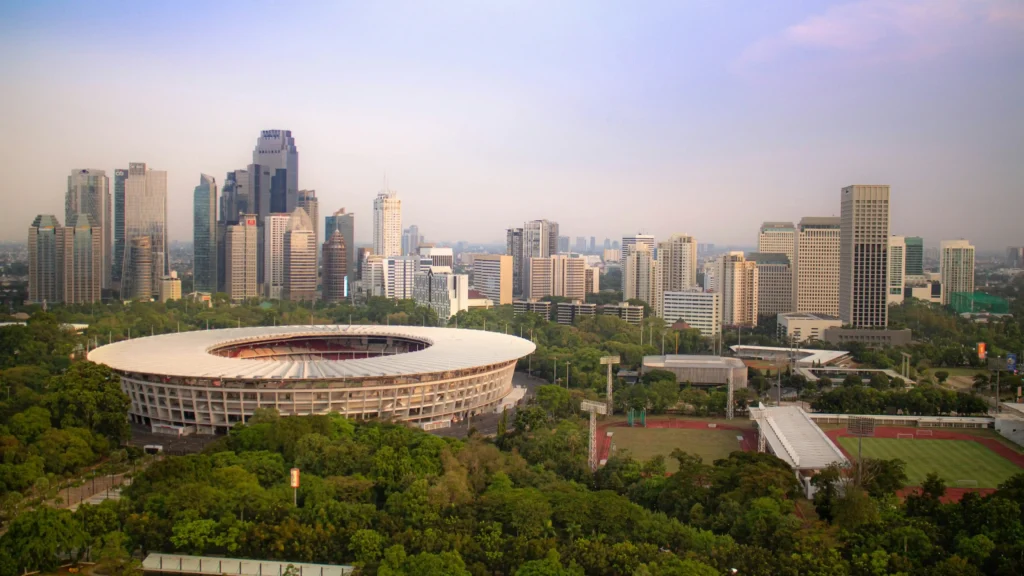
GBK is not just a stadium on a quiet street. It is a multi-purpose sports complex that regularly hosts major football and athletics events, and it is also a top venue for international concerts. That mix matters because it changes the pattern of crowd arrivals and departures, even for people who think they are “going to the same place.”
When the schedule is busy, the complex also functions like a broader lifestyle space. People come for events, but others come for fitness and community activities in the open areas too. So even on non-game days, the surrounding area can feel lively, and on event days it can feel dramatically louder and more crowded.
Post-event traffic and transport demand hit at once
Now zoom into the moment right after an event ends. You are not just competing with normal commuter traffic, you are competing with thousands of people trying to leave on the same timeline. Ride-hailing can become scarce or expensive in that period, and finding a taxi can take longer than you expected. Even public transport may be less convenient by the time you are free to move.
This is why location choice changes the trip more than many people think. Staying near GBK does not only improve your ride to the venue. It helps you handle the toughest part of the day, the post-event exit and return, when delays are most likely and options are most limited. That “location difference” is the reason staying close is a strategy, not a luxury.
Once you understand the “why,” the next step is the “how”: how proximity actually plays out in planning and day-of movement.
“Arrive early, plan your exit, and let your hotel do the heavy lifting.”
1. Choose lodging by effective access, not map distance
On event day, what matters is how easily you can move from where you sleep to the GBK area when crowds and cars are already moving slowly. Two places can look similar on a map, yet one becomes a walk-and-cross ordeal while the other lets you reach your destination with fewer frustrating decisions.
Use the idea of true proximity: if you can return smoothly after the show, that location will save you more stress than a “close enough” spot that still forces you into the hardest traffic moment.
2. Plan arrival with a time buffer
When gates and security lines fill up, the safest plan is to arrive early enough to avoid rushing. That is not just about getting in on time. It also helps you manage heat, queues, and the mental load of showing up in a busy crowd.
Keep your preparations simple and fast. Packing light is helpful because large bags are often not permitted inside, and moving with fewer items makes everything smoother.
3. Plan post-event return before the first note starts
Most people focus on getting to GBK, then get surprised by the aftermath. Right after an event ends, ride-hailing can become scarce and prices can jump, because thousands of people are trying to leave at once. Even taxis and public transport can feel harder by the time you are finally free.
This is where staying near GBK becomes a real mechanism. Walking back to your accommodation can help you avoid the surge window and the congestion bottleneck, so you can recover instead of negotiating transport under pressure.
When you follow this workflow, the day feels more predictable. You are not relying on perfect traffic or unlimited rides. You are building your plan around how the hardest moments usually happen, and reducing decision stress when conditions are at their worst.
Next, the focus shifts to choosing correctly in the first place: how to pick the right place to stay, not just “anywhere close.”
Choosing the right place near GBK is less about distance and more about what happens when everyone tries to leave at once.
Map-distance thinking versus schedule thinking
Map-distance thinking says, “It looks close, so it should be easy.” Schedule thinking asks a more useful question: “Can I get back without adding an extra layer of stress after the event?” The catch is that Jakarta traffic and crowd surges change what “close” really means on event day.
If your lodging location forces you into tricky roads, long walks, or repeated cross-city decisions after the show, the trip gets heavier right when you are tired. True proximity is about practical return simplicity, often meaning a short, low-decision walk back rather than a “maybe quick” ride.
Luxury comfort-first versus serviced apartments versus high-demand booking
Luxury comfort-first lodging can feel like a win for event trips because it supports an easy night-to-night rhythm. You arrive, decompress, and sleep well, which matters when you are dealing with crowds. Still, comfort does not replace access, so proximity should be the foundation.
Serviced apartments are a different kind of smart when you travel with family or want routines that do not break. Extra space can help everyone reset between event moments, especially for longer stays. The third angle is booking demand: for major concerts and matches, nearby rooms can fill up quickly, so early booking protects both availability and your options.
Put these comparisons together and you get one simple rule: choose lodging that makes the post-event moment easy, not just convenient on paper.
Unfortunately, even good intentions can still lead you into wrong choices. That is why the next section focuses on the common mistakes and misconceptions before you book.
What to watch out for before you book
Central Jakarta is not automatically near GBK
Most people assume “central” equals “near GBK.” Here’s the trap: Jakarta traffic is unpredictable, so a location that looks close on a map can turn into a long, exhausting commute when event crowds hit the roads.
The result is usually simple and painful. You arrive late, or you return drained because you have to solve transport under pressure instead of enjoying the event.
Ride-hailing won’t be easy right after the event
It sounds convenient, but ride-hailing can get worse after a big match or international concert. Demand spikes at the same time, and pricing can surge. Drivers can also be harder to find when everyone is requesting a ride at once.
If you plan your return assuming a quick, affordable pickup, you can end up stuck waiting longer than you expected. Staying close reduces how much you depend on that post-event window.
Driving and parking can be harder than you think
The trap is thinking you can just drive and park easily. On event days, the area around GBK can become congested, and getting in or out can take far longer than “just a short trip.” Even when parking exists, the experience can be slow and frustrating.
That leads to missed timing. You may arrive late, and you may lose valuable time trying to leave instead of getting rest after the show.
Public transport is not “too complicated” to consider
Many travelers treat public transport like it is only for locals. In reality, the MRT station closest to GBK is a key option, and it can be straightforward when you plan routes before you go.
This matters because the more you rely on last-minute decisions, the more likely you are to get caught when crowds peak. A simple plan can keep you from paying extra or wasting time.
Last-minute bookings increase your risk and your cost
Booking too close to the event date is a common way to lose. Hotels near GBK tend to sell out quickly for major dates, and remaining rooms can be more expensive.
The consequence is that you end up accepting a worse match for your needs, which undermines the main benefit of staying near GBK: easier post-event recovery.
These are avoidable planning errors. Once you spot them, you can level up your approach with expert habits that make the day run smoother.
Expert-level habits that make the trip smoother
Picture this: you are already exhausted from the show, and yet getting back feels calmer than you expected. That is the difference good preparation makes around GBK.
Prioritize unimpeded access to the right GBK gate
Experienced attendees think in real movement, not just “walking distance.” They focus on how you actually approach GBK and which gate or access point fits your plan. If your route forces detours and repeated crossings, you will feel it after the event.
The goal is simple: minimize the number of decisions you make when crowds are thick. Fewer choices means less stress when you are tired and time feels tight.
Scout pedestrian routes for crossings and crowd flow
Experts check how people move, not only how roads connect. Around major venues, crowd patterns can slow you down even on short distances. That is why crossings, underpasses, and the direction of foot traffic matter more than the straight-line route.
When you preview the path, you reduce surprises. You arrive with a mental map, so you do not hesitate while everyone is moving at once.
Pack for the tropical day and the event-night reality
Event logistics are not only about time. Tropical weather and late schedules change what “easy” feels like. Packing light helps when large bags can be restricted, and it also makes walking feel less painful.
Hydration and a charged phone are small things that quietly prevent big problems. When you lose battery or get overheated, even a simple walk back can feel harder.
Choose true proximity, even if it looks slightly farther
This is the counterintuitive part: the best stay is sometimes the one that is not the closest by map. A slightly farther location can be easier if it connects smoothly to the MRT line or avoids the most awkward pedestrian bottlenecks.
Experts treat “true proximity” as unimpeded travel time. If getting back stays simple, the location wins, even if another option is technically nearer.
Put these habits together and you reduce uncertainty. You spend less energy guessing on the day, and more energy resting or enjoying what comes next.
For travelers who want a calmer plan around GBK logistics, exploring options like event-ready comfort and convenience can help you focus on the experience instead of the exit countdown.
Putting it all together for your GBK stay
Confirm your event timing and buffers
Start by verifying the real start time, not just the plan you heard earlier. Then add extra time for entry and the busy build-up around the complex.
Choose lodging by practical access
Double-check how you will move from your room area to GBK during the busiest moments. If “near” still forces complicated exits or risky crossings after the event, it will likely cost you energy.
Plan arrival early to avoid queue pressure
Arriving early helps you avoid rushing through security and crowds. It also gives you time to settle before the show momentum takes over.
Plan your post-event return route first
The hardest part is usually leaving after the event. If you can walk back, that often beats depending on ride-hailing availability right when demand spikes and pricing can surge.
Book early for major dates
Major concerts and big matches can drain rooms fast. Booking ahead protects your options and reduces the chance you end up far away or stuck with less convenient choices.
Pack for walking and real comfort
Keep your load manageable because large bags can be restricted. Hydrate, and make sure your phone battery is ready so you are not improvising while tired.
When you follow this order, the day becomes smoother. You reduce worst-case stress, and your trip feels less like solving problems and more like enjoying the experience.
Conclusion
Staying near GBK Jakarta is really about reducing uncertainty when crowds peak and transportation becomes hardest. With the right proximity mindset and a simple plan for arrival and post-event return, your day feels lighter from the first step to the last.
If you want a smoother GBK itinerary, the team at https://ashleyhotelgroup.com can help you plan a stay that fits your event-day needs.